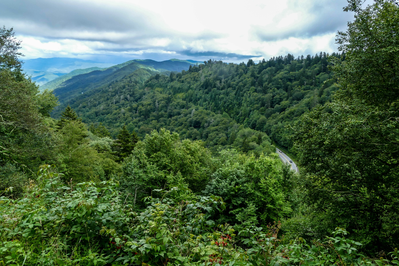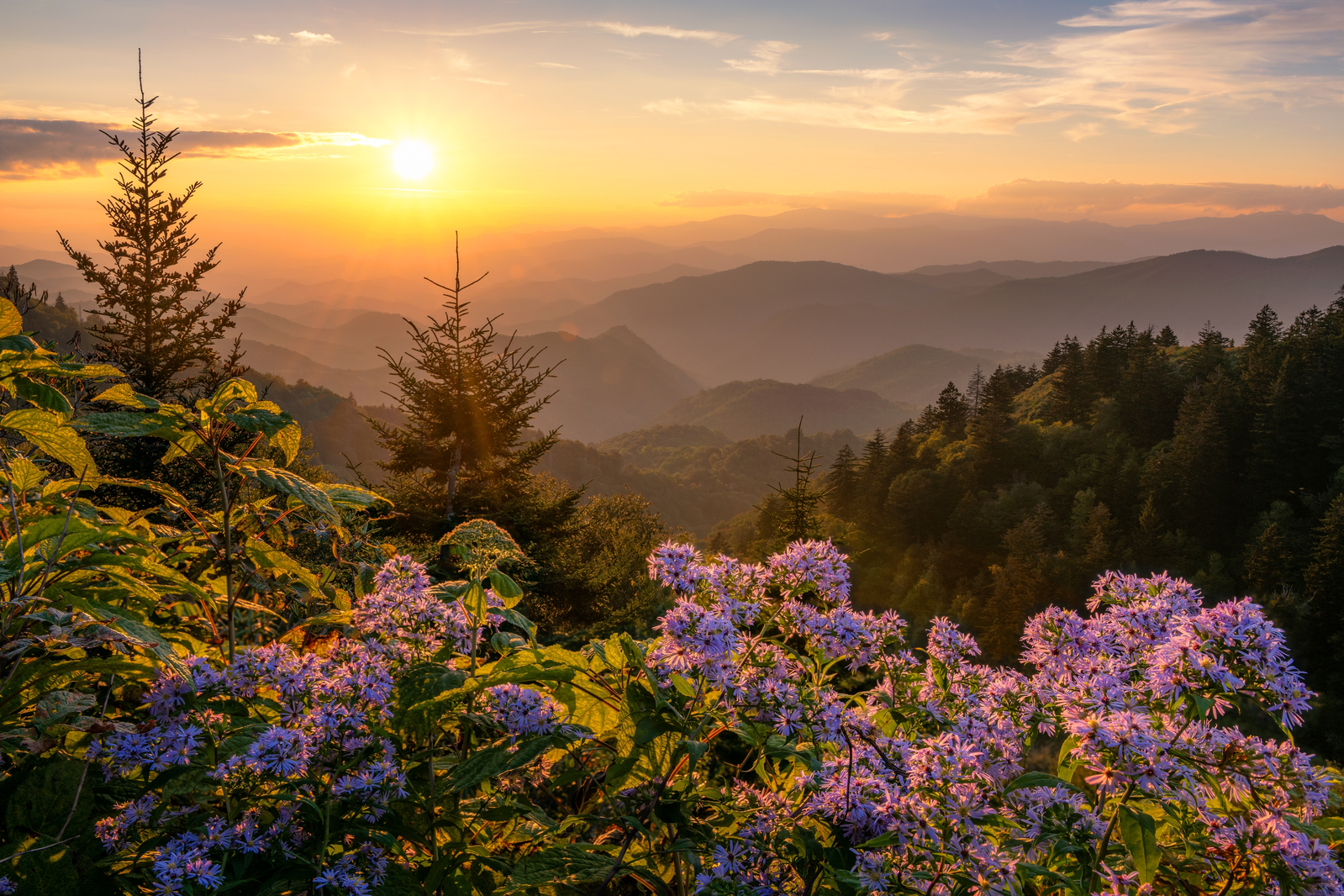



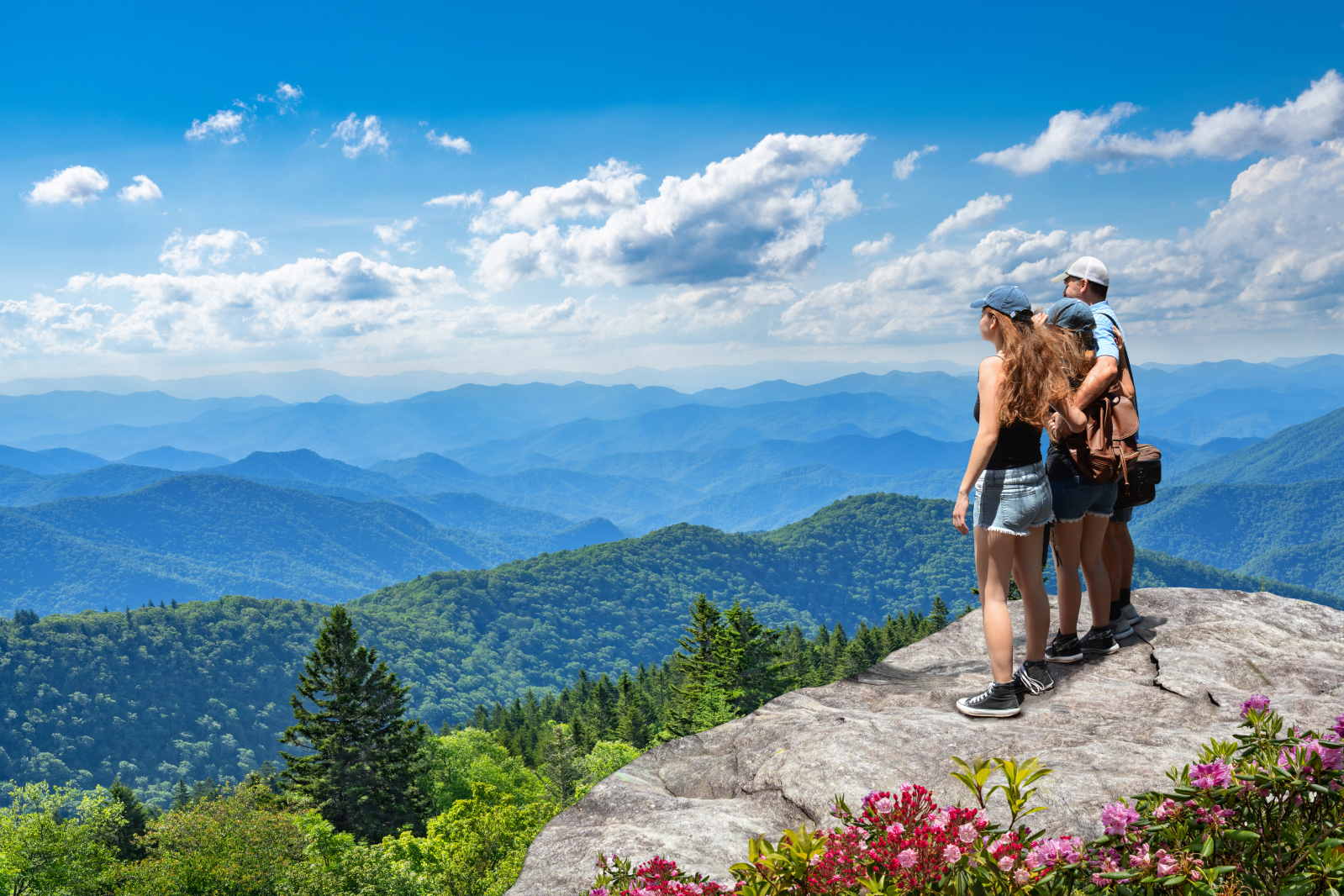

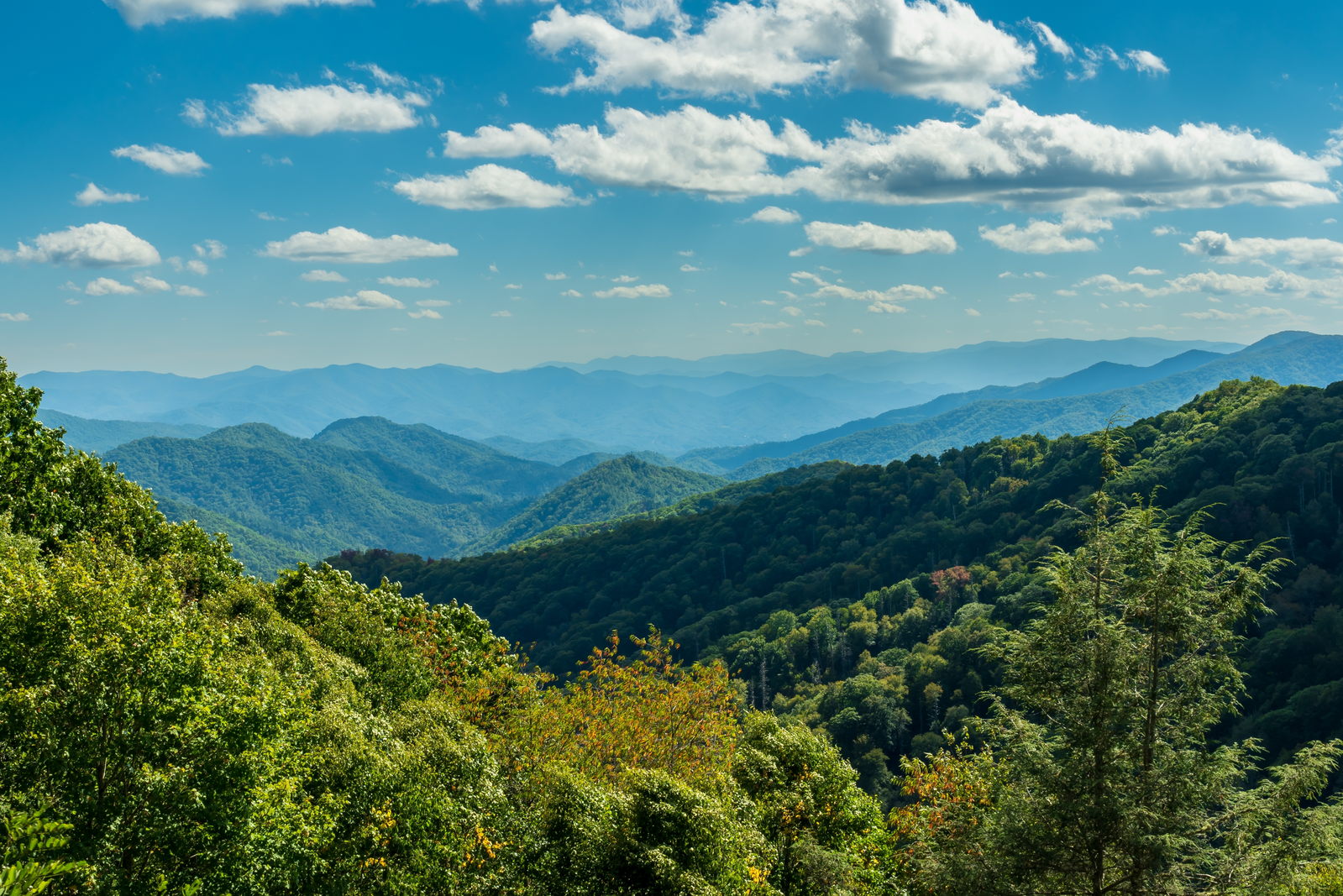
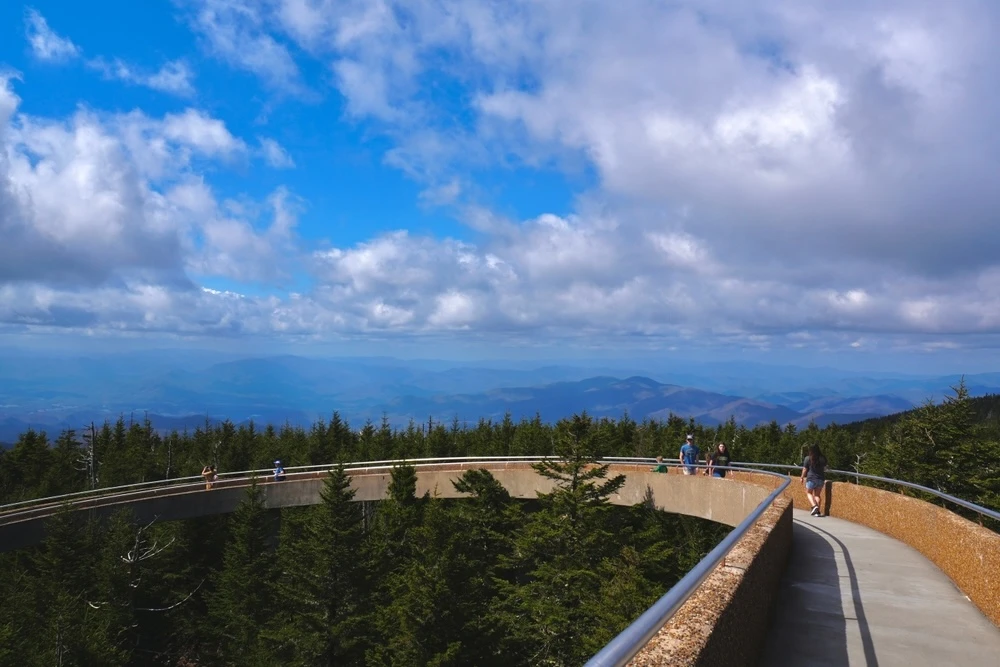
Looking out from Kuwohi, endless blue ridges roll into the horizon and guests can see miles into the distance. It’s no wonder that it’s become one of the most popular must-see spots in the Smokies. Yet, there’s much more to this mountain than just scenery. Long before Kuwohi made its way onto Smoky Mountain itineraries, this place had a life of its own, full of Cherokee stories, old traditions, and deep spiritual meaning. Here’s everything to know about the history of Kuwohi:
What Does Kuwohi Mean?
Kuowhi, pronounced koo-WHOA-hee, means “mulberry place” in the Cherokee language. Mulberry trees once covered the mountaintop, and even though they’re now gone, the name stuck. For the Cherokee people, it’s more than just a name, it’s woven into their culture and memory. While today it’s known mostly as a stunning overlook, it’s been a sacred spot for generations of the Cherokee, serving as a place where people came to pray, hold ceremonies, and pass down wisdom. The mountain sits right in the heart of Cherokee ancestral homeland, and the meaning it holds hasn’t faded.
Becoming Clingmans Dome

While it’s always been known as Kuwohi to the Cherokee people, when European settlers showed up in the early 1800s some referred to it as Smoky Dome due to the unmistakable blue mist that often surrounds the peaks. In 1859, Swiss-American geographer Arnold Guynot renamed it Clingmans Dome to honor Thomas Lanier Clingman, a North Carolina politician, explorer, and military officer.
The Return of the Name Kuwohi
After more than 160 years, a push to return the mountaintop to its original Cherokee name began. The Eastern Band of Cherokee Indians led the way, eventually gaining the support of community members, historians, and the National Park Service. In September 2024, the U.S. Board of Geographic Names made it official: the mountain would again be called Kuwohi. The decision recognized the importance of honoring the area’s Indigenous roots and the generations of Cherokee tied to this place.
Why Kuwohi is So Significant

Kuwohi sits at 6,643 feet above sea level. That makes it the highest point in Great Smoky Mountains National Park, the highest mountain in Tennessee, and the third-highest east of the Mississippi! Stats like that attract plenty of bucket listers, but there’s much more to the story than just altitude.
For generations, Cherokee medicine people climbed Kuwohi for ceremonies and spiritual traditions. The Cherokee believe the mountain is a place where the spiritual and physical worlds meet. During the period surrounding the Trail of Tears, the rugged slopes of Kuwohi served as a shelter for some Cherokee people who stayed behind in their homeland, adding stories of survival and resilience to Kuwohi’s rich history.
Visiting Kuwohi Today
Planning a trip to Kuwohi? Your visit will start with a 7-mile scenic drive along Kuwohi Road from Newfound Gap Road, ending at the parking area near the summit. After that, you’ve got a short, but steep, half-mile paved walk to the Kuwohi Observation, where some of the most stunning and never-ending views in the Smokies await. While Kuwohi is open year-round, keep in mind that Kuwohi Road closes seasonally from December through March. You can still visit when the road is closed, but getting there requires a much, much longer hike.
Digging into Kuwohi’s past adds real meaning to your visit while connecting you with some of the history that makes the Smokies so unique. Are you ready to visit? More than just stunning views await you at this popular mountaintop. Learn about some secret places to see on your way to Kuwohi as you start making plans to visit!